Hydroponic Water Temperature: A Useful Target and Warning Signs
Learn how nutrient-solution temperature affects roots, oxygen, disease risk, nutrient readings, and the practical ways to cool or warm a reservoir.

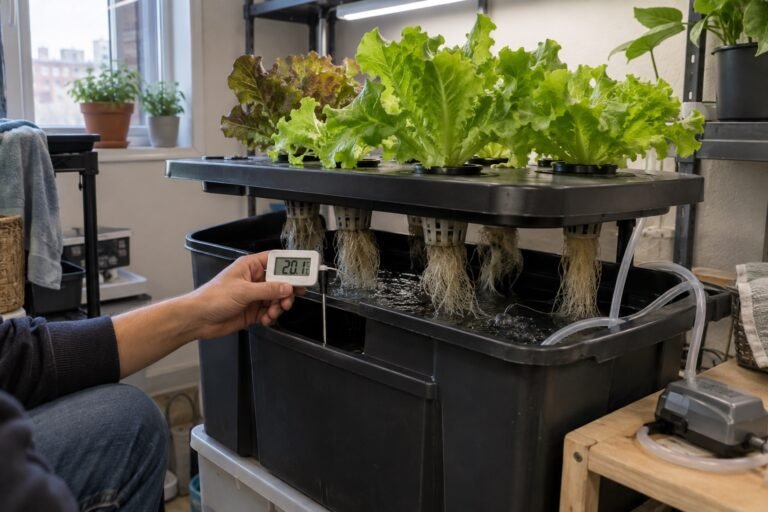
Learn how nutrient-solution temperature affects roots, oxygen, disease risk, nutrient readings, and the practical ways to cool or warm a reservoir.
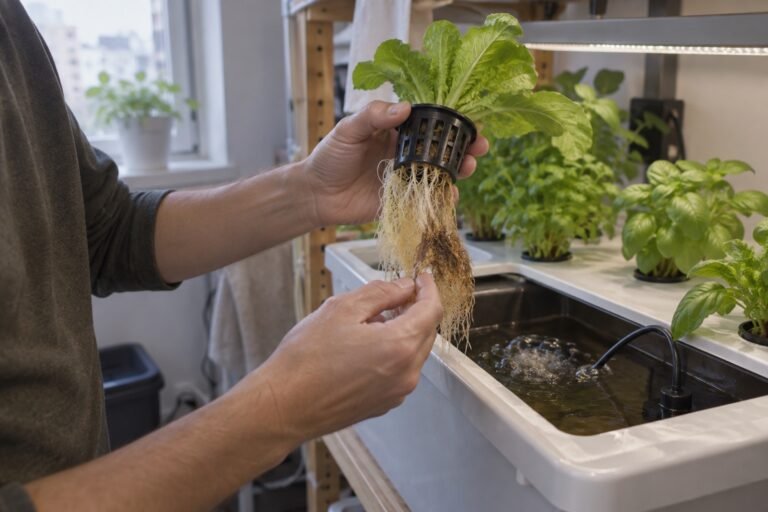
Identify hydroponic root rot by texture, smell, plant response, and system conditions, then stabilize oxygen, temperature, sanitation, and the reservoir.
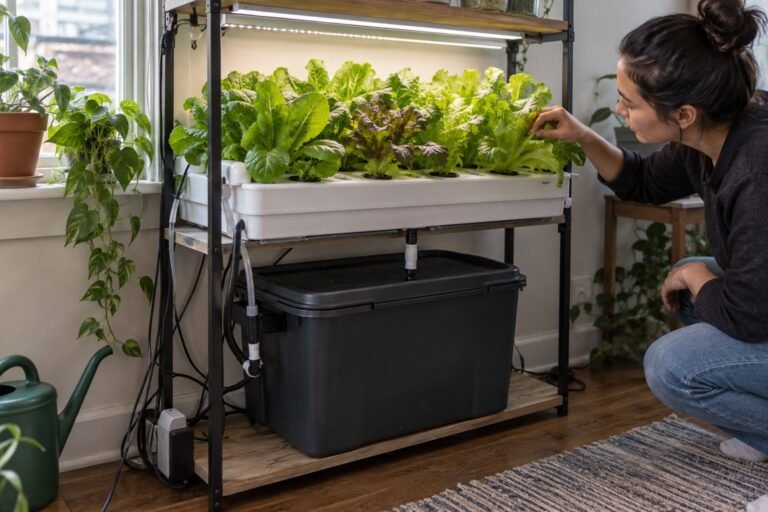
Estimate hydroponic reservoir size by plant count, crop type, system volume, and refill interval, then leave room for circulation and maintenance.
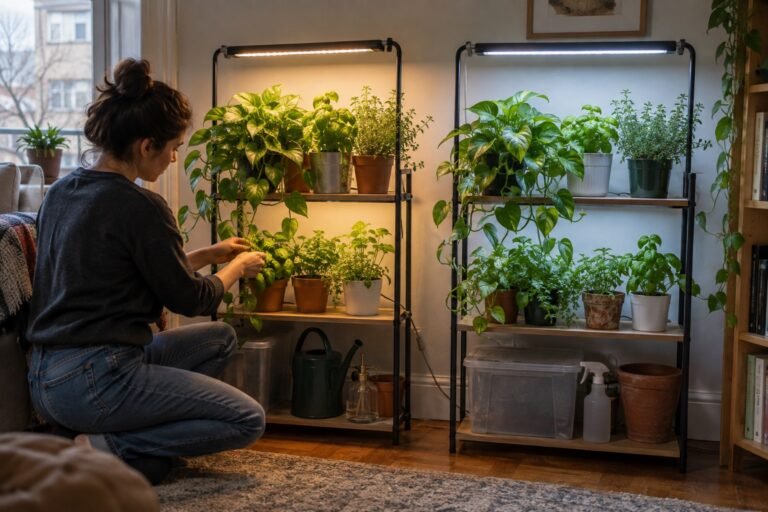
Understand grow-light color temperature, how Kelvin differs from plant-usable light, and which spectrum is comfortable for seedlings, herbs, and houseplants.
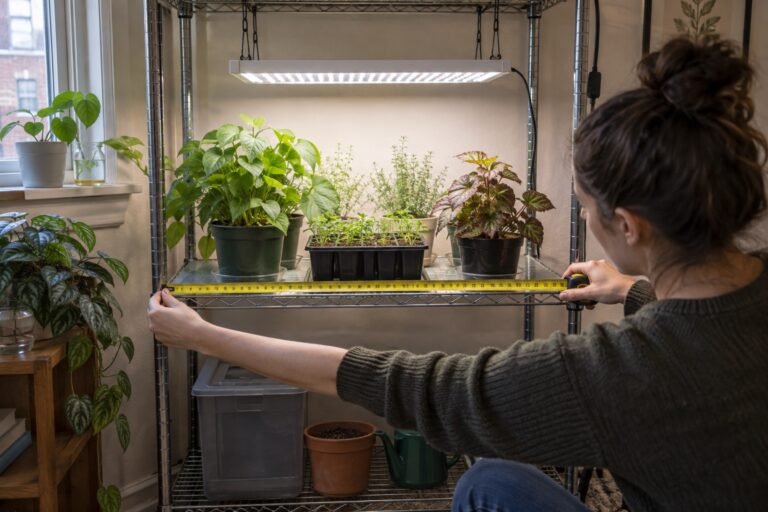
Use watts per square foot as a rough power check, then size a grow light with PPFD, coverage, distance, crop needs, and daily light integral.
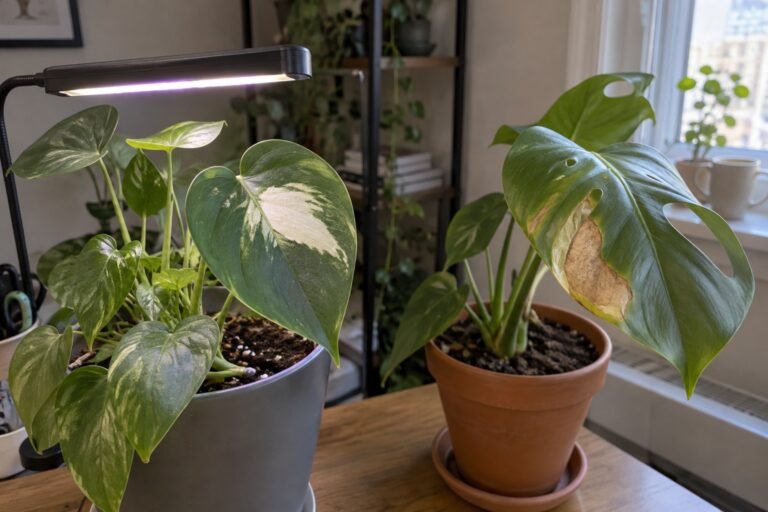
Compare grow-light burn and sunburn by timing, leaf position, heat, bleaching, and recent plant moves, then adjust light without overcorrecting.
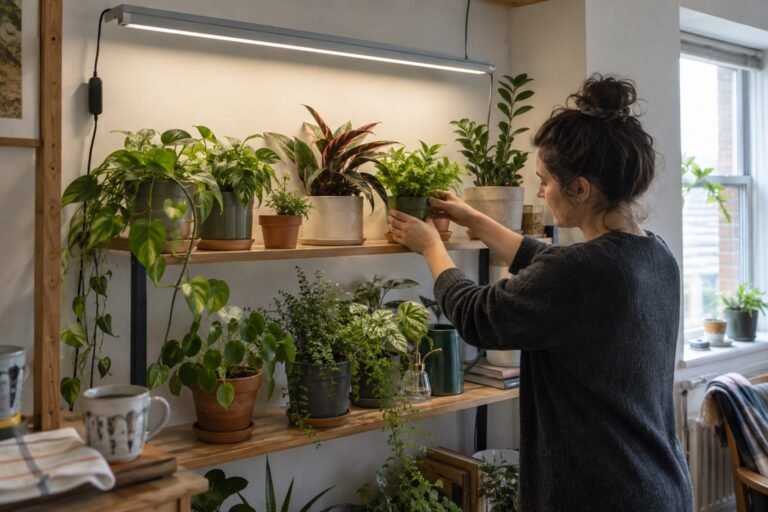
Move houseplants under stronger artificial light in measured steps, using fixture height, run time, leaf response, and PPFD to avoid bleaching.
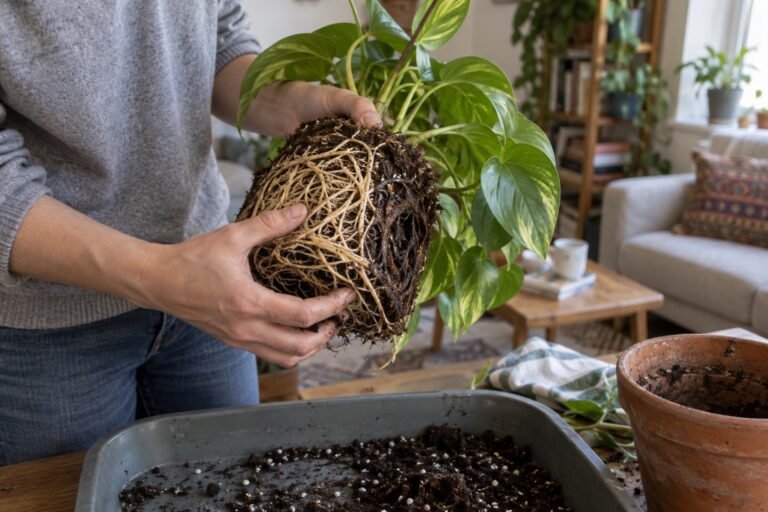
Identify healthy houseplant roots and root rot by texture, smell, color, crown condition, and plant symptoms before cutting or repotting.

Understand useful houseplant soil pH ranges, recognize when testing is worthwhile, choose a method, and correct the cause without abrupt amendments.

Protect balcony plants from drying wind with safe screens, stable containers, plant grouping, ties, and a setup that preserves airflow and light.